![varsome-new.png]](https://docs.varsome.com/hs-fs/hubfs/varsome-new.png?height=40&name=varsome-new.png)
Often, users will request assays with UMIs to be used for the analyses of their samples. It is important for the assays to be added with UMIs on our database, so that they are recognized by our pipeline and can be properly processed during alignment, as they can affect read quality and variant calling.
Below, you will find examples of visualization of the analysis alignments before and after proper processing of UMIs, where an assay was first added to our database without taking the UMI sequences into consideration, and then re-added with the UMIs taken into account. The same samples were re-analyzed in both cases.
Example 1:
Before processing of UMIs, a variant was missed in the germline analysis of a sample. The variant in question (ANXA5(NM_001154.4):c.-135G>A p.?) was not called in the analysis, but appeared on the analysis BAM file. From the alignment, we can see that there is some soft-clipping around the variant.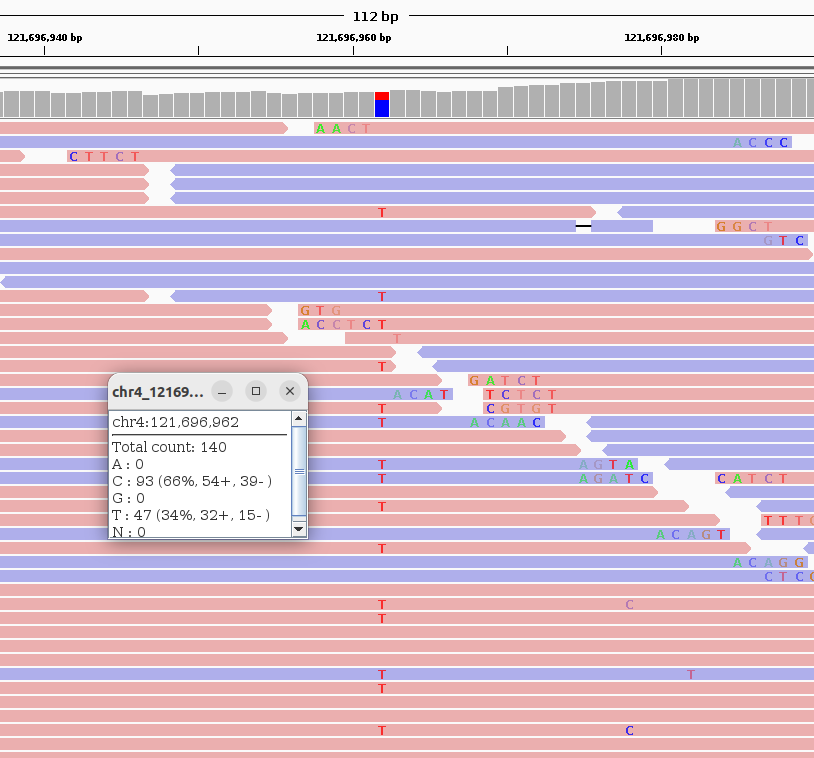
Another image of the same alignment before the processing of UMIs:
We notice more soft-clipping around the variant of interest.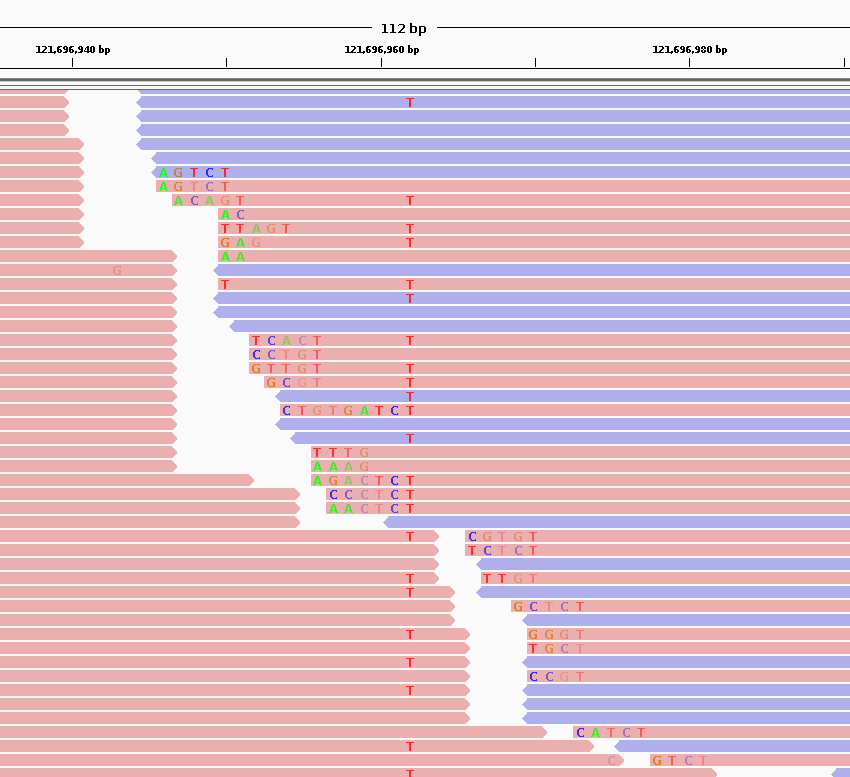
After proper processing of UMIs of the selected assay, the variant was called, and there is no soft-clipping in the area surrounding it: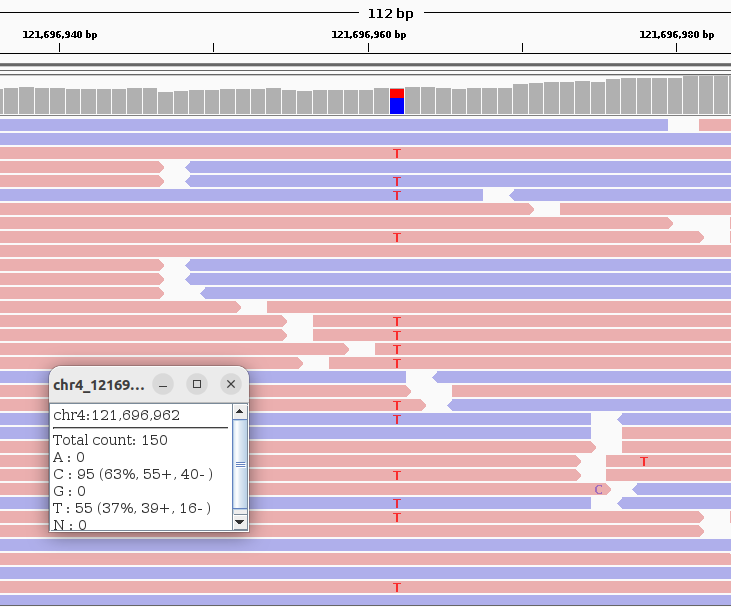
Example 2:
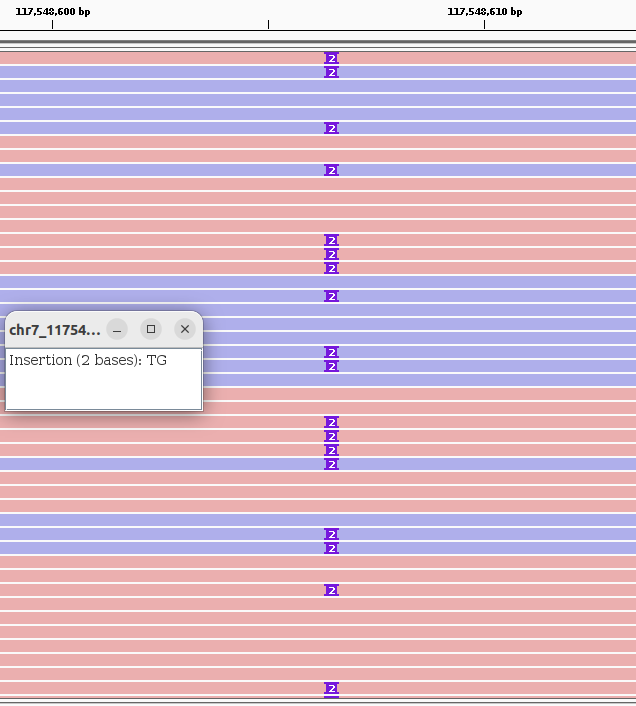
Before the proper processing of UMIs, in this analysis, the variant (CFTR(NM_000492.4):c.1210-13_1210-12dup p.?) was initially not called but would appear on the analysis BAM file. The area around the variant had a few indications of soft-clipping: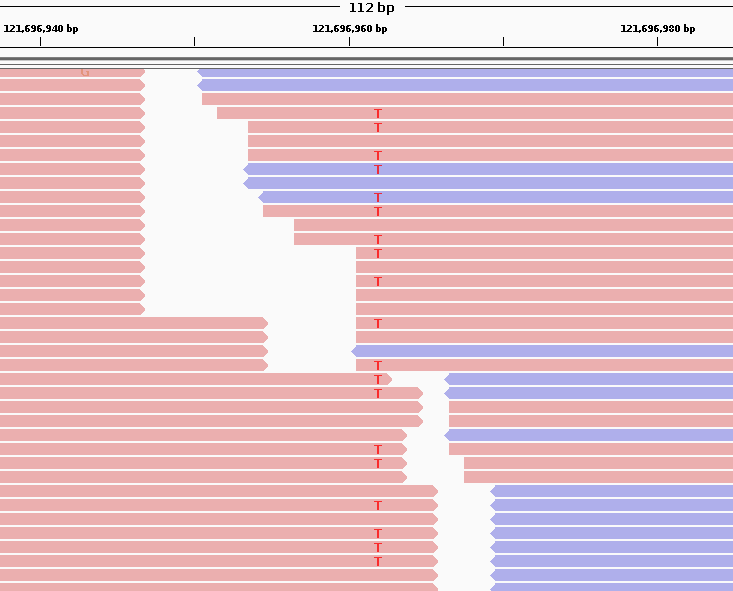
Afterwards, the variant was clearly called and no soft-clipping was observed: